

Hercules
The hero on his knees

First of all…I forgot to mention that recently I’ve reached over 100 subscribers! Thank you to all who have subscribed or who follow me, I’m so grateful for your support.
If you would like to support me financially (no obligation of course) then I have a Buy Me a Coffee account. Stelliferous will never be paywalled, if you feel you’d like to chip in, the link is below.
And now onto Hercules!
What the constellation represents: the great hero Hercules, but originally known as the ‘kneeler’
History: ancient Greek, derived from an older constellation of uncertain origin
Region of sky where it is located: northern hemisphere
When visible: February-November
How visible: intermediate
Objects of interest: Keystone asterism, globular clusters M13 and M92, Hercules-Corona Borealis Great Wall
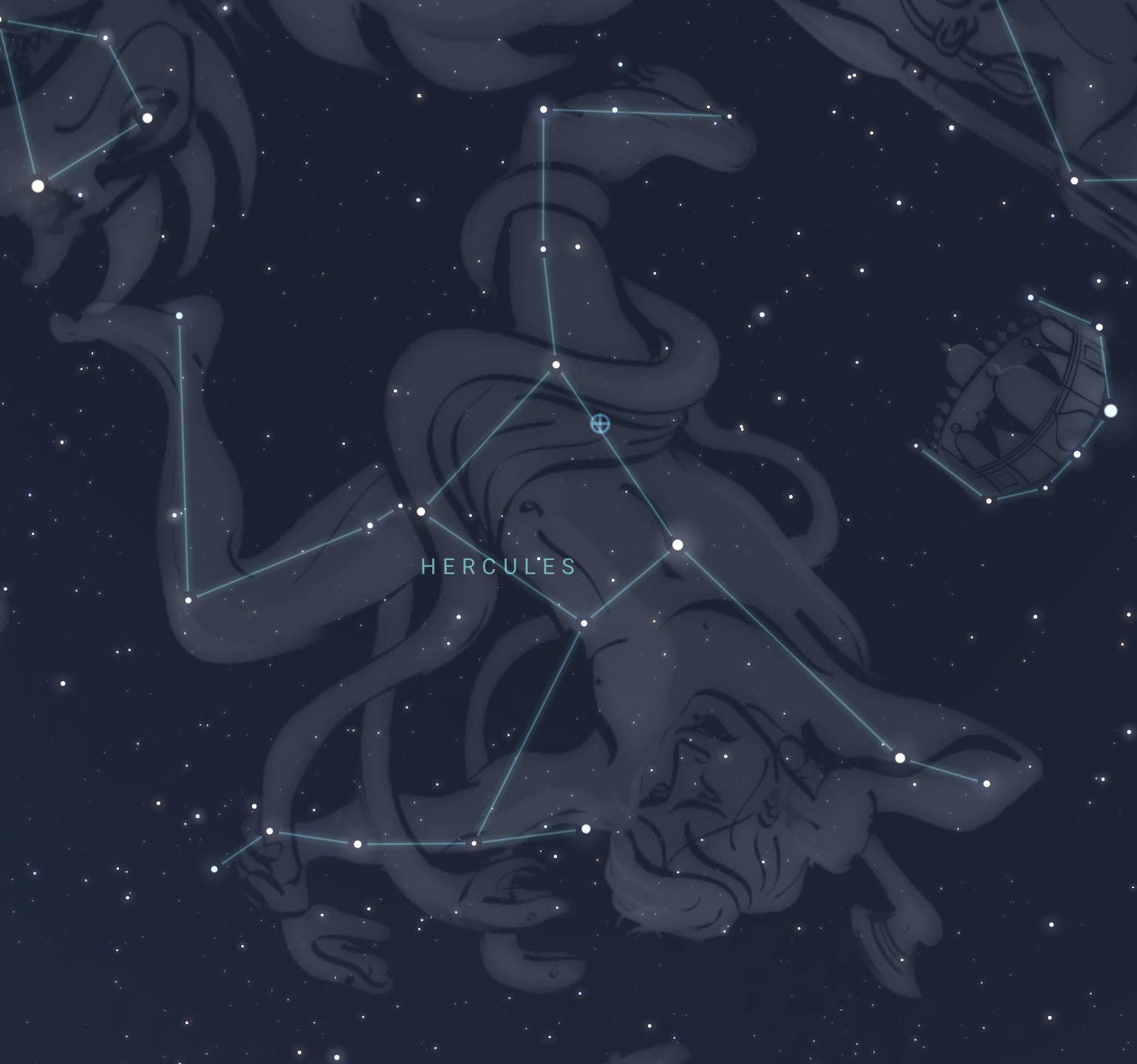
How to see it: Hercules might not be as heroically bright as you’d expect, but his distinctive ‘Keystone’ of four stars is conveniently placed between two of the brightest stars in the northern sky, Arcturus and Vega. You can either look west of Vega, or east of Arcturus to find the constellation.
Right there in its orbit wheels a Phantom form, like to a man that strives at a task. That sign no man knows how to read clearly, nor what task he is bent, but men simply call him On His Knees…over the middle of the head of the crooked Dragon, he has the tip of his right foot.
Aratus, Phaenomena
Chances are you’ve heard of Hercules, THE most famous hero of Greek mythology. You may know the story of his twelve labours. You might even have seen the Disney film, which takes a lot of liberties with the original myth to make it child-friendly, but one thing it got right was that Hercules was immortalised in the stars at the end. So may be surprised to find that his constellation isn’t very prominent. Even so, this region of space is intriguing, and the science behind it just as compelling as the stories.
To locate him, look between Bootes and Lyra for the Keystone, a trapezium of four stars marking the hero’s torso. From there, lines of stars represent his arms and legs. And befitting this mighty icon of myth, Hercules is big and sprawling, the 5th largest constellation in the sky.
The Labours of Hercules
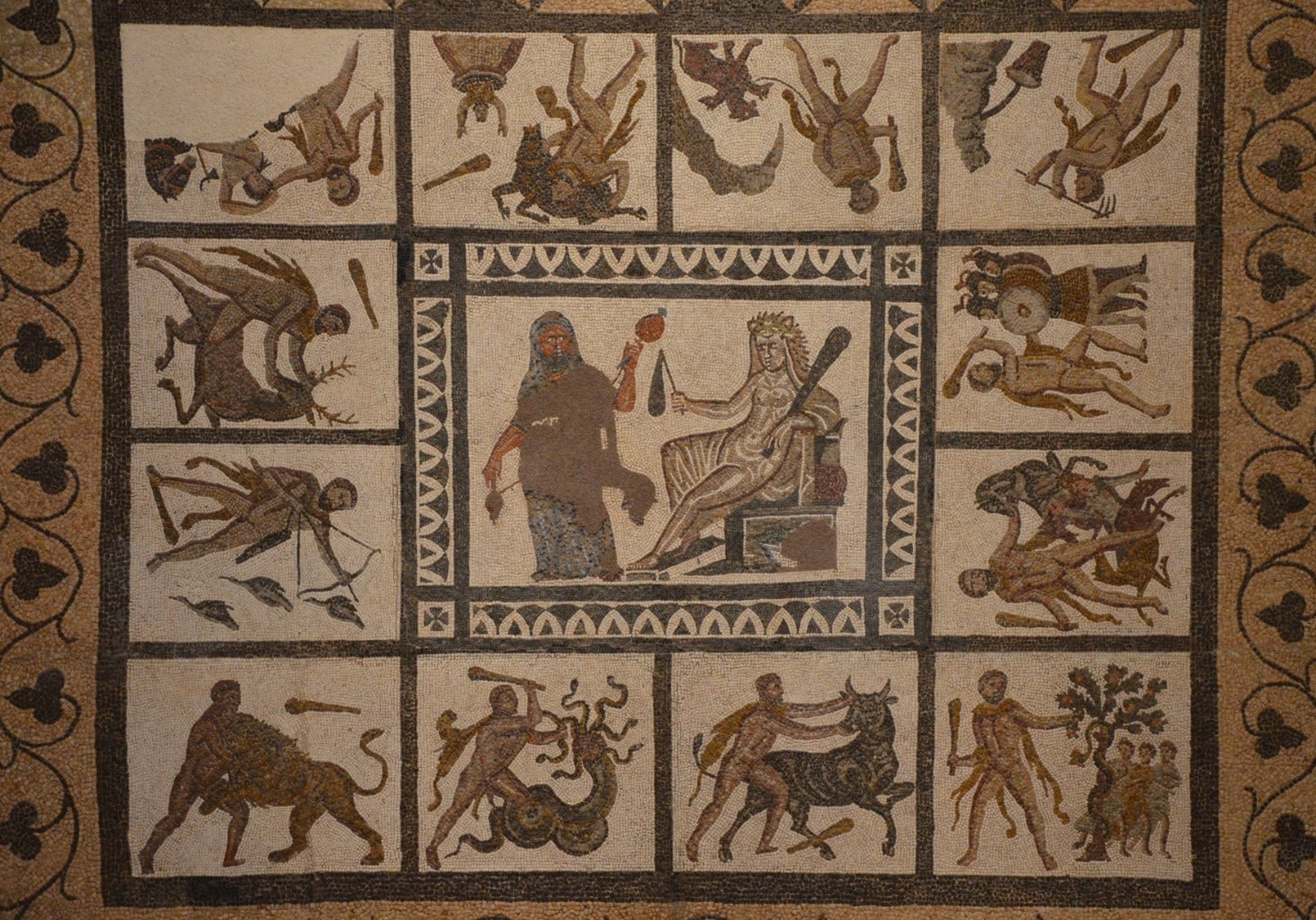
First of all, Hercules is his Latin name. To the Greeks, he was Heracles. I will use the two names interchangeably in the article, with varying degrees of consistency. There are many stories about Heracles, too many to fit into this article! So here’s a run-through of the stories of his birth and the twelve labours.
Zeus, the chief god who really couldn’t keep it in his pants, slept with the mortal Alcmene, who bore him a son. Unsurprisingly Hera, wife of Zeus, was ticked off at this, especially when her cheating husband placed the newborn to her breast when she was asleep. She woke to see a strange baby suckling away, and tore her nipple out of his mouth, spraying milk in a great arch across the sky. Thus the Milky Way was created.
Back in his cradle, the child was visited by two snakes sent by Hera, which he strangled. Those sips of divine milk had blessed him with incredible strength and immortality, and also resulted in his name, Heracles - ‘Glory of Hera’. A title the goddess resented and that she would torment him with throughout his life.
After Hera cursed Heracles with madness, causing him to kill his wife Megara and their children (Disney left that part out!) he was advised by the oracle of Delphi to do the bidding of King Eurystheus, and only then would he be absolved of his murders. Heracles was given twelve labours to complete: almost impossible challenges that no mortal could fulfil or survive:
1) Kill the Nemean Lion, a beast with an impenetrable hide that couldn’t be pierced by swords or arrows.
2) Slay the Hydra, a fearsome multi-headed serpent with poisonous breath and blood, whose heads grow back every time they are chopped off. And if that wasn’t enough, Hera distracted Heracles with a crab that kept pinching his heel as he fought the serpent.
3) Capture the gold-antlered Ceryneian hind.
4) Catch the dangerous and uncontrollable Erymanthian Boar.
5) Clean the filthy stables of King Augeus in just one day. Heracles diverted two rivers so they flowed right through the stables and washed them.
6) Chase away the flesh-eating, metal winged Stymphalian Birds that were causing trouble for the local populace.
7) Catch the fire-breathing Cretan Bull.
8) Round up the human flesh-eating horses of Diomedes.
9) Obtain the girdle of the Amazon queen, Hippolyta.
10) Steal the cattle of the giant Geryon, guarded by a vicious two-headed dog.
11) Retrieve the golden apples of the Hesperides. These magical fruits of immortality grew on a tree at the edge of the known world guarded by Ladon, a ferocious dragon sent by Hera.
12) Grab Cerberus, the three-headed hound of Hades, from the underworld.
Heracles successfully completed the labours, and had many more adventures, but his life ended painfully. His second wife, Deianera, accidentally injured him with a poisoned cloak. Doomed to feel agony for all eternity, he consigned his mortal body to burn away on a funeral pyre, so his immortal spirit could ascend to the heavens. The gods gave Heracles the great honour of becoming a constellation, and he finally found rest among the stars.
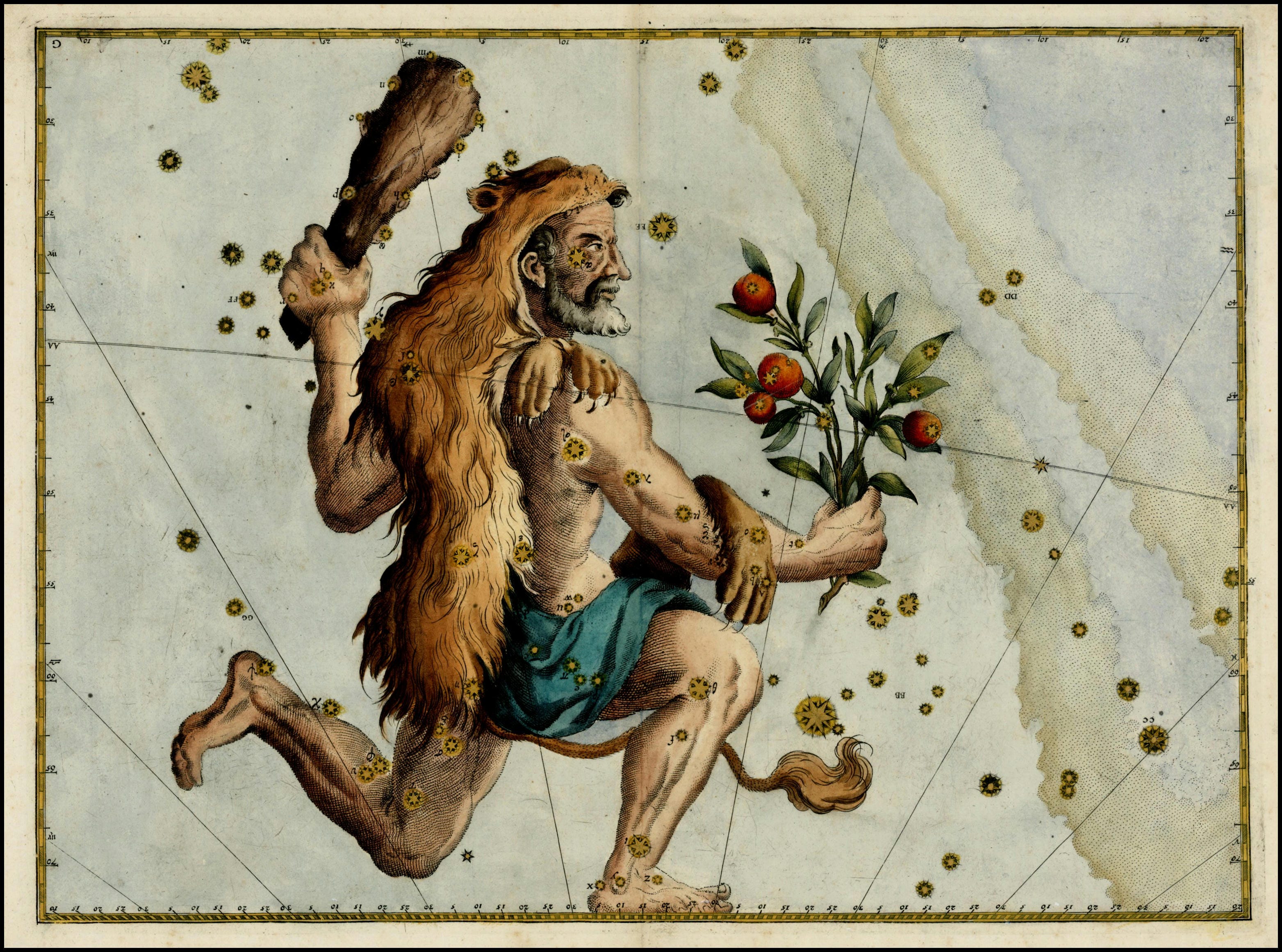
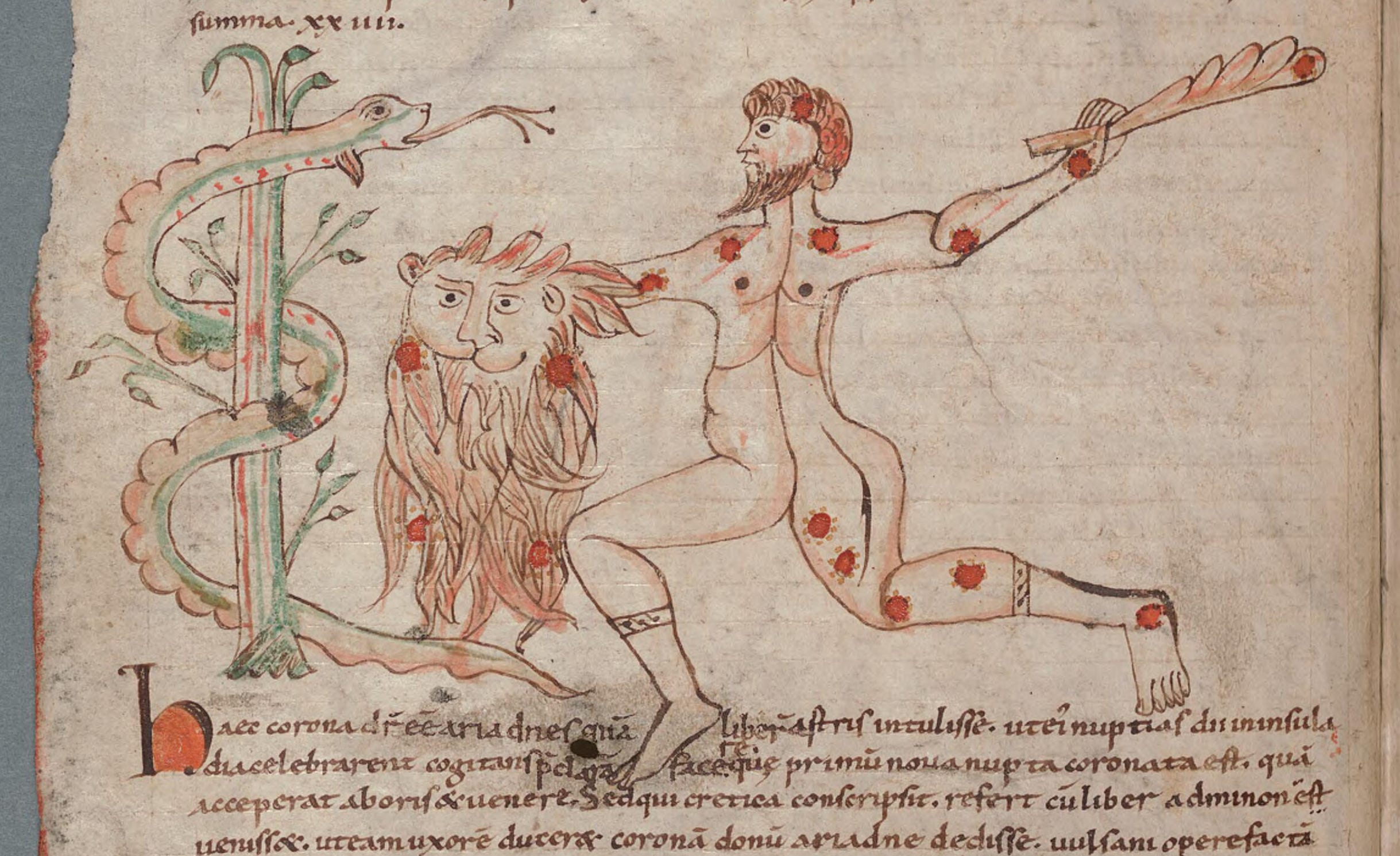
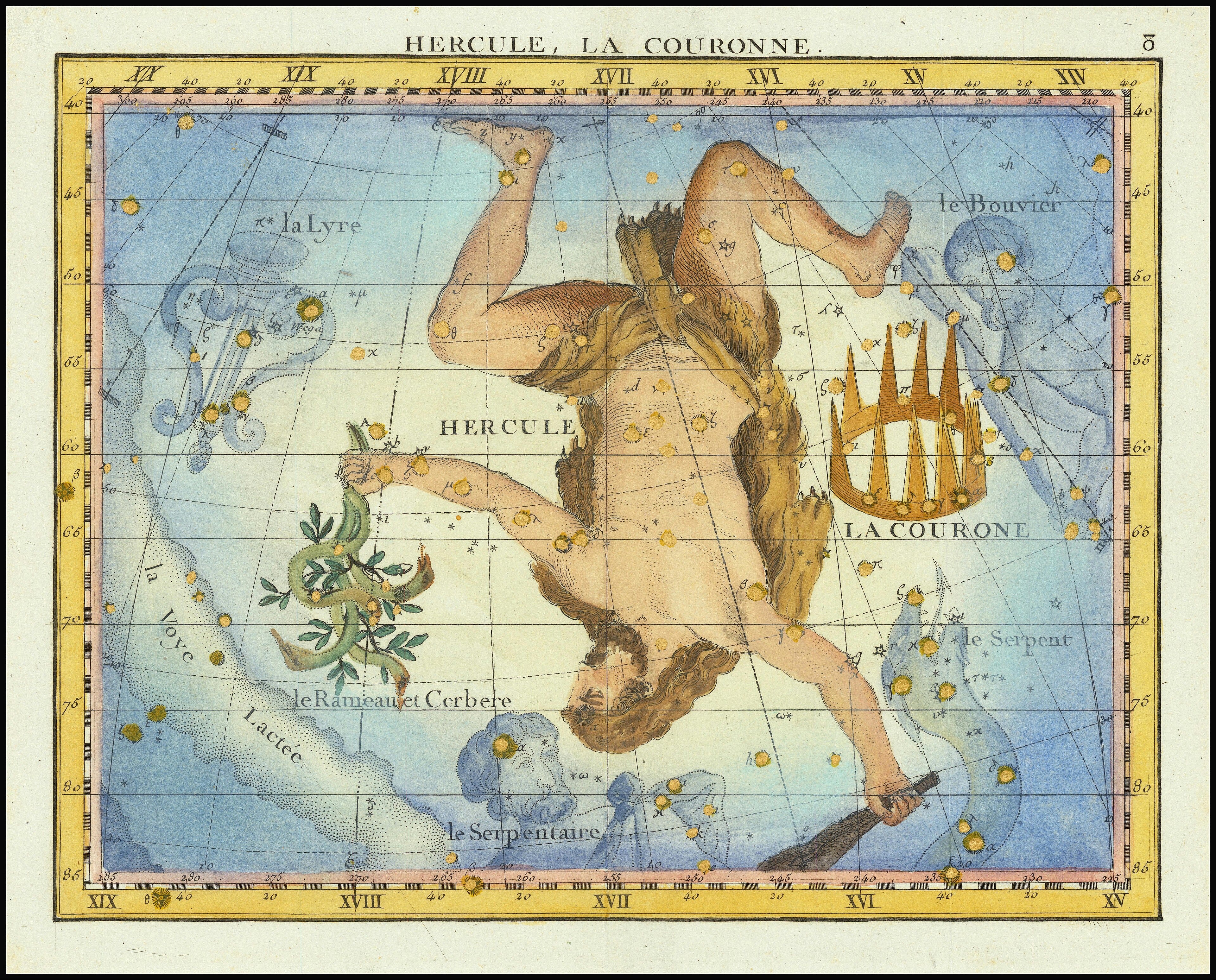
On star maps, Hercules is shown kneeling and holding an upraised club, wearing a lion’s pelt, one foot on the head of Draco. In his other hand, he either holds Cerberus, or a bushel of apples representing the fruit of the Hesperides.
Some of his labours are depicted in the constellations. There’s Hydra, with Leo, the Nemean Lion, just above. Draco is the dragon Ladon. In some interpretations, the Cretan Bull is Taurus, and the Stymphalian Birds are Cygnus and Aquila. The tiny constellation Sagitta is one of Heracles’ arrows, and Cancer is the crustacean that taunted him when he fought the Hydra. There’s even a large grouping of constellations labelled as the Hercules Family. It includes Hydra, Cygnus, Aquila, Sagitta, and Centaurus, which represents Chiron, teacher of Heracles. But this constellation family also contains many unconnected to the myth of Hercules, and oddly, it doesn’t include Draco, the dragon that’s been mythically intertwined with Hercules before the Greeks even came up with his myth. More understandable is the omission of Cancer and Leo, which are part of the zodiac.
Some writers on star lore suggest that Hercules may have been based on an ancient solar archetype and his myth is inspired by the Sun’s annual journey, with the twelve labours as the zodiac signs. This works for Taurus, Cancer and Leo, but any links to other signs do not show similarities, unless they refer to older, lost interpretations of the zodiac.
The Kneeler
Hercules wasn’t the original name for the constellation, it has an older title: Engonasin, Greek for ‘kneeler’. Who is this man, and why is he on his knees? Maybe he’s pleading to the gods to be released from his burdens, or battling with a monster, overcome with the task at hand. Along with Heracles, Greeks also associated these stars with Prometheus, Theseus, Atlas, and Orpheus (note that Lyra is nearby), among others. The Kneeler was also described as a ‘phantom’, perhaps due to the ghostly appearance of his stars.
On many star maps, Hercules is shown upside down. What’s up with that? Well, maybe, Hercules is really, really tired after performing those labours - little wonder he’s lying there splayed out like he’s had a few rough weeks! A few ancient authors also wrote that the hero’s exhaustion was the reason for the constellation’s odd stance. But what if there was a moment in history when he was ‘upright’, at a time when the sky was tilted differently? Mesopotamia and the Levant were the wellspring for much constellation inspiration, could this be where our enigmatic Kneeler originates?
In The Glorious Constellations, Giuseppe Maria Sesti states that Hercules ‘was in the correct position in the 4th millennium BC, when it culminated on the northern meridian at midnight during the spring equinox’. Space.com also says that Hercules would have been upright thousands of years ago over Mesopotamia. But precession of Earth’s axis means the stars slowly shift position, leading to Hercules’ awkward appearance today. I used Stellarium to simulate the night sky above a location in Iraq, setting it to the spring equinox of 3000 BCE. And what do you know, when facing north, Hercules is oriented the right way up.
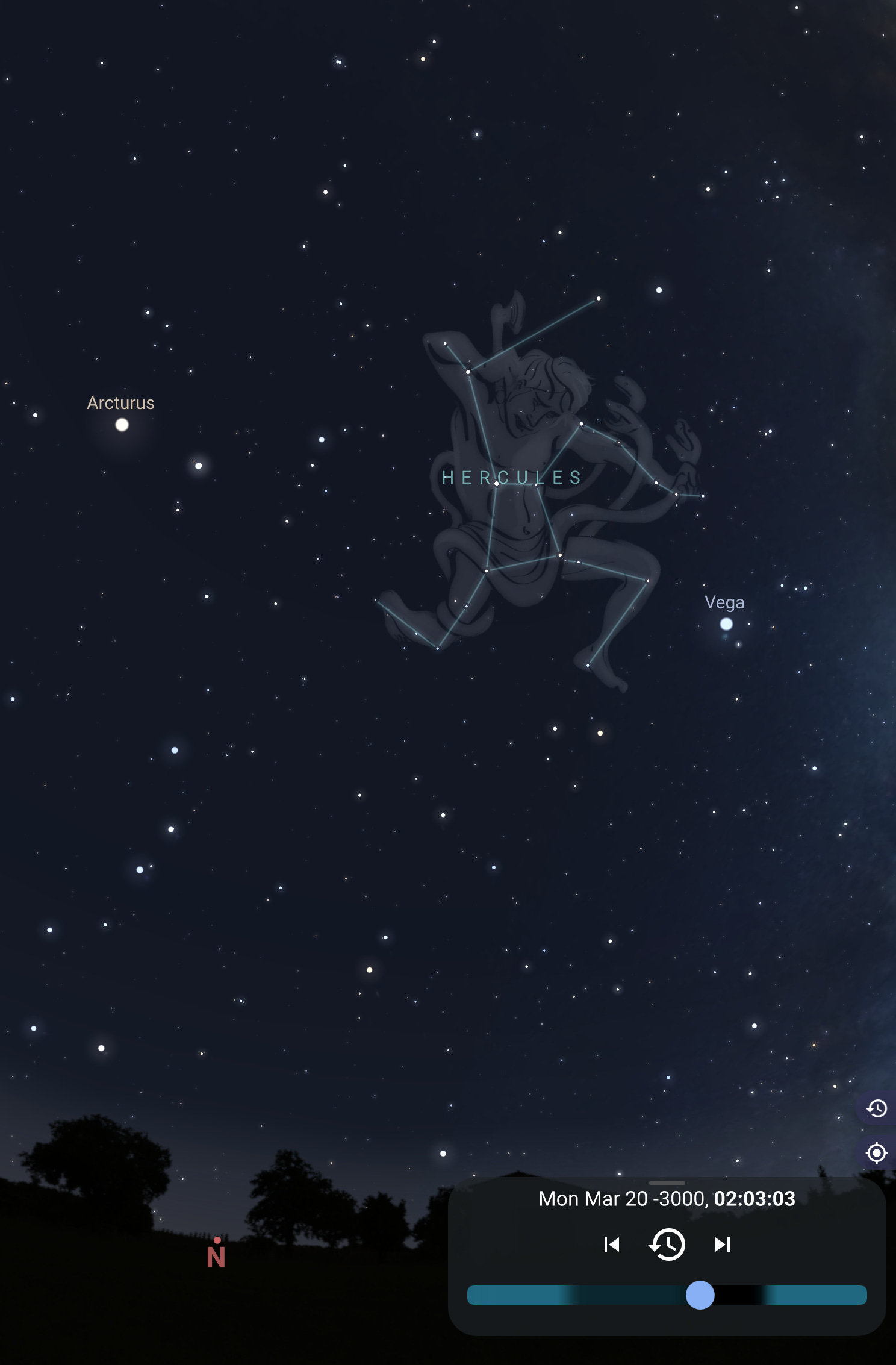
To the Sumerians, Hercules could have represented their mightiest heroic figure, Gilgamesh, whose story has some similarities with that of Heracles. He’s sometimes depicted battling a lion, and in the Epic of Gilgamesh, he slays the Bull of Heaven, and he journeys to the underworld on his quest for immortality. Other sources, however, suggest that Gilgamesh’s constellation was Orion.
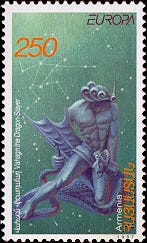
The lore of the Hercules constellation has been entangled with dragons or serpents from the start. In Babylonian astronomy, Hercules was either known as Sitting Dog, or the Standing Gods, depicted as a figure with a serpent’s lower body - the stars of Draco. The constellation has also been linked to Marduk, the chief of the Babylonian gods often associated with Jupiter. Marduk conquered the serpentine goddess Tiamat (in some accounts, she is Draco) by slicing her up, creating the heavens and the Earth, and establishing order over chaos. Tiamat’s blood became the bitumen and crude oil oozing from the land.1 For the Phoenicians, who lived in what is now Lebanon, Hercules may have represented Melkarth, a fertility god associated with the sea, the underworld and the cycle of vegetation, or their sun god killing a dragon. A similar story is told in Armenia, where the constellation is known as Vahagn, the solar god of war, bravery and victory, again shown slaying a dragon. I also wonder if the idea of a dragon-slaying hero in the stars of Hercules and Draco ultimately influenced the legend of St George.
In China, the southern parts of Hercules along with neighbouring Ophiuchus represented a celestial marketplace and the walls bordering the market, and other parts of the constellation formed the bed of the emperor’s harem and the office where taxes were calculated.
Some First Nations people in North America noticed the proximity of the stars of Hercules to those of Corona Borealis, and have stories connecting the two constellations. In Ojibwe astronomy, Hercules is Noondeshin Bemaadizid, the Exhausted Bather. This is a man who’s undergone a ceremony in a sweat lodge, which tires him physically, but also rejuvenates his spirit. Traditionally, sweat lodge ceremonies take place in spring, which also happens to be when the constellation is visible. Near the Exhausted Bather is the Sweat Lodge itself - Corona Borealis. And to the Blackfoot of the Great Plains, stars in Hercules made up a constellation called the Spider Man’s Fingers, spinning a thread to let So-at-sa-ki, the Feather Woman, down from the sky. Corona Borealis represents the Spider Man’s home.
Stars of the Hero
Rasalgethi, or Alpha Herculis, is the star that marks the hero’s head, with its name deriving from Arabic for ‘head of the kneeler’. Because of the constellation’s upside down position, Rasalgethi is in the southern part of Hercules. This is a multiple star system, its main star, Rasalgethi A, is a large, bloated red giant with radius of 264-303 times the size of the Sun. If it replaced the Sun in our solar system, it would reach just short of the orbit of Mars. Observing the star with a telescope shows Rasalgethi B, which itself is made up of two smaller stars shining yellow and white.
The Rasalgethi system is 360 light years away, so the light we see in 2026 left the star in 1666, the year of the Great Fire of London. Fitting for a star with an ember-like hue.
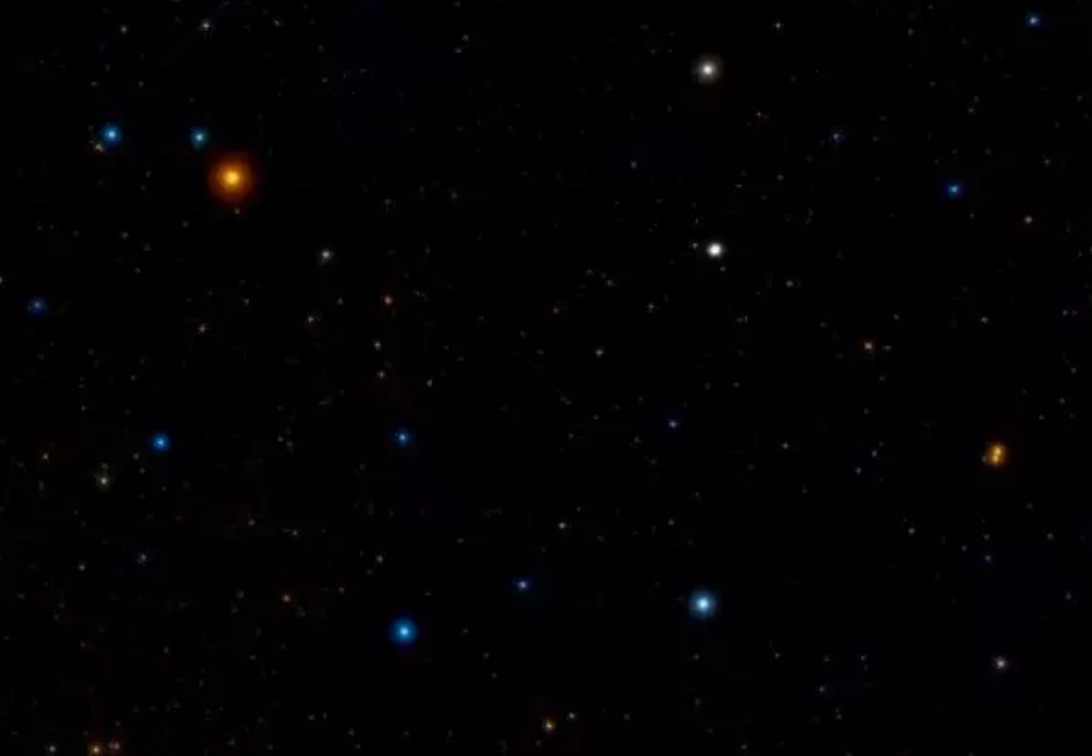
The brightest star in the Keystone asterism is Zeta Herculis, a binary star system 35 light years away. In 2026, we see starlight from 1991, the year the Soviet Union collapsed. If you’re 35 and reading this, you’re seeing starlight from the year you were born. The main star in the system is twice as big as the Sun, but seven times more luminous. And between Zeta and Eta Herculis, at the hero’s heart, lies the constellation’s greatest treasure…
Glorious Globulars
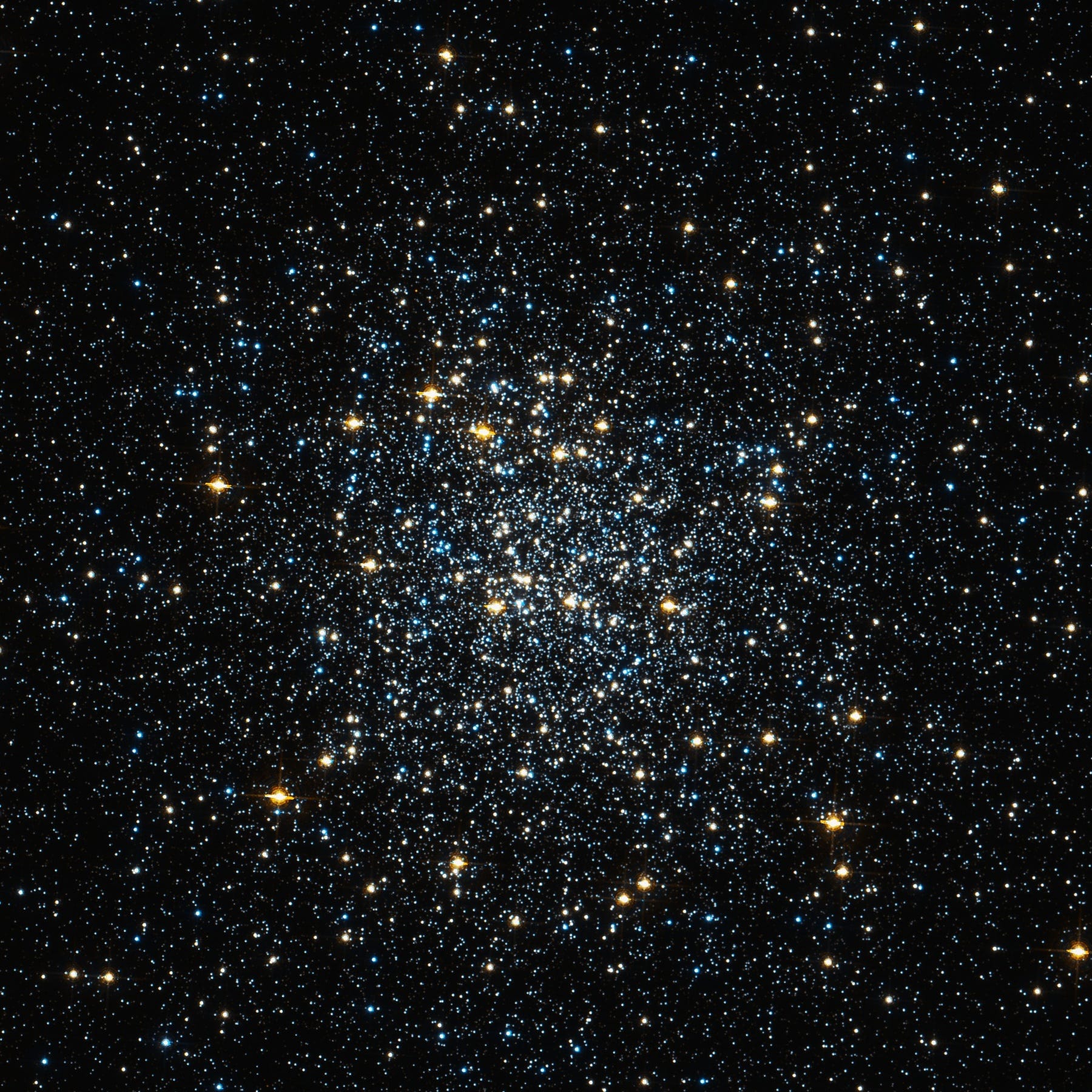
Without doubt the most wonderful thing to observe in Hercules is Messier 13, also known as the Great Hercules Cluster, the only globular cluster in the northern hemisphere that can be seen with the naked eye in dark skies. Its discoverer, Edmund Halley (of comet fame) observed it in 1714, describing it as ‘a little patch, but it shews it self to the naked eye when the sky is serene and the Moon absent’. Unless you’re somewhere unspoilt by light pollution, you’ll need to use binoculars to find it. M13 looks like a fuzzy blob, hovering ghost-like in your peripheral vision. But turn a telescope towards it and it transforms into a glittering disco ball of stars.
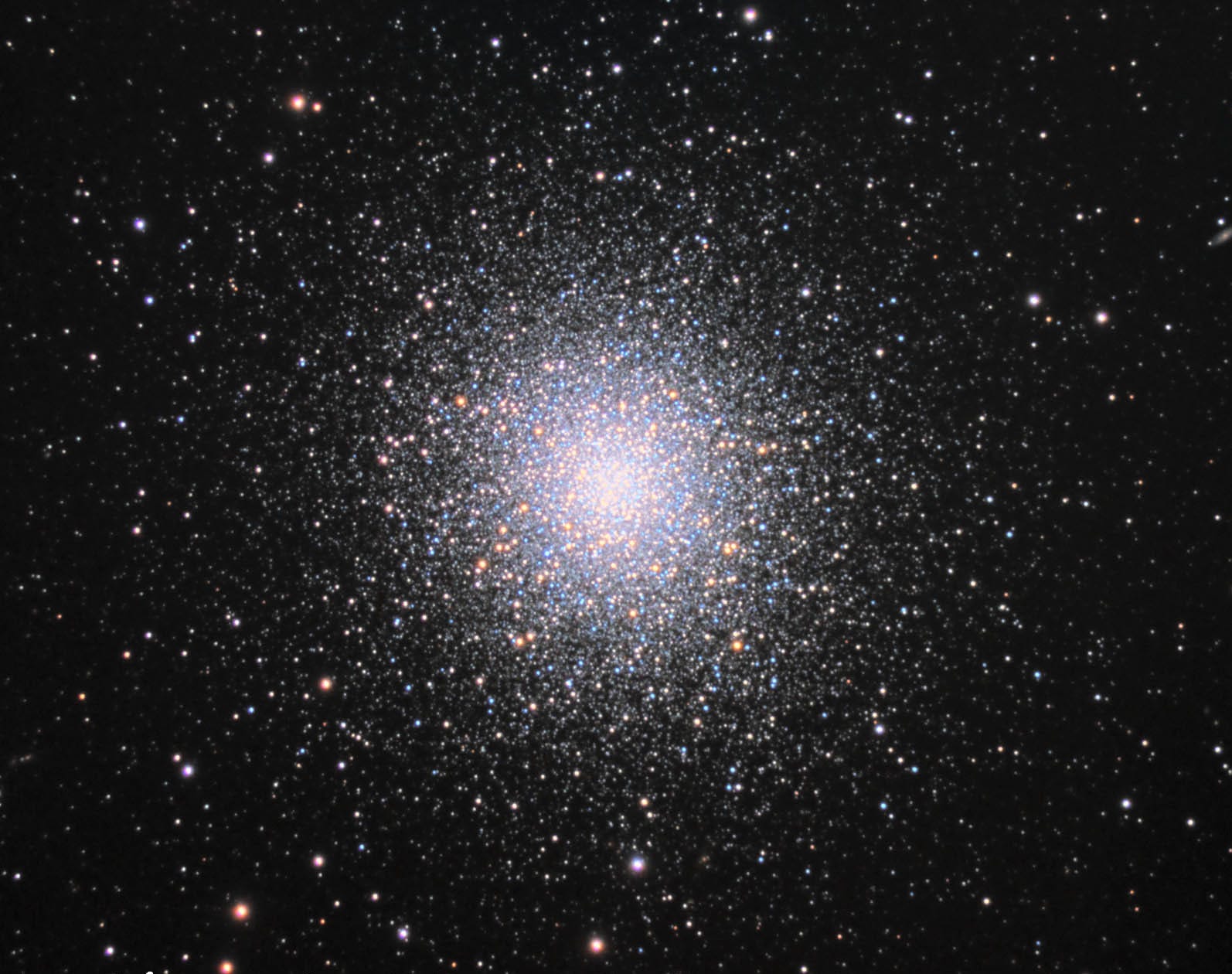
M13 is 145-150 light years across and 22,000 light years away, and contains over 300,000, or possibly half a million stars. When we look at this cluster, we see light from a time when Earth was gripped by an Ice Age, Britain was part of mainland Europe and covered in ice sheets and glaciers. (I’m writing this during a heatwave, the irony has not gone unnoticed!)
So far I’ve written in depth about open clusters such as the Pleiades and the Beehive Cluster. But globulars like M13 are different. If I compare an open cluster to a small town, then a globular is a densely populated city - an agglomeration of hundreds of thousands of stars packed into a globe, so tightly rammed together that they can be light days apart, rather than light years. Sometimes they get close enough to collide and form new stars in the process - a highly unusual means of stellar formation. And they are ancient - M13 is around 12 billion years old.
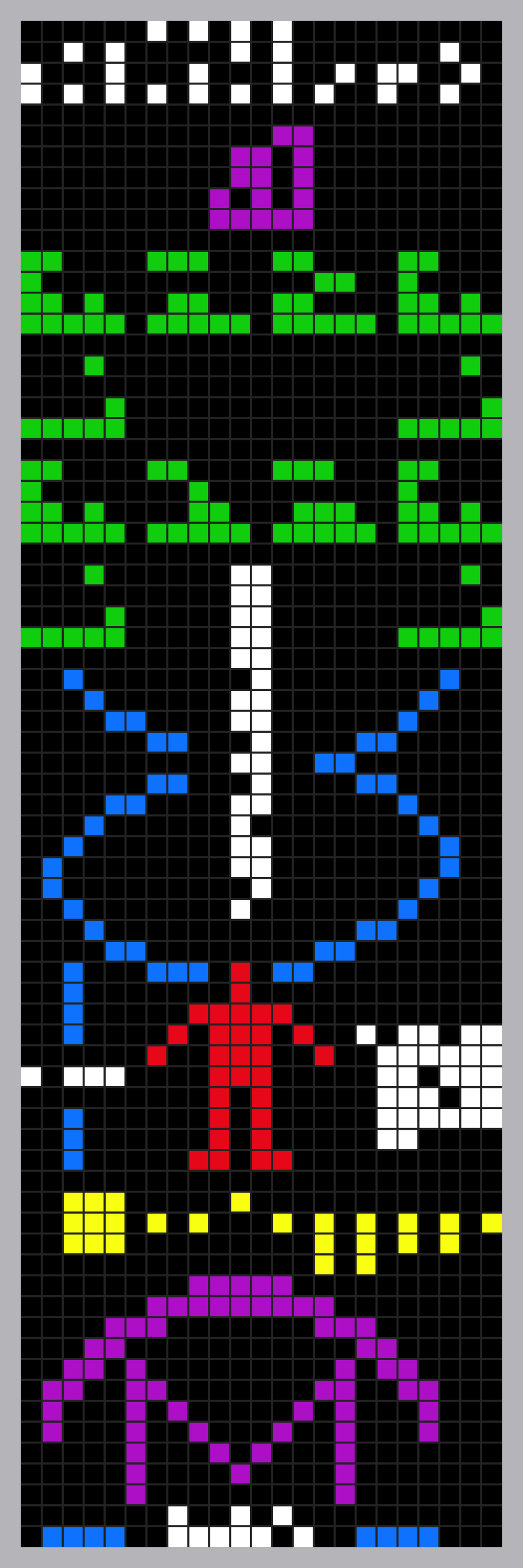
In 1974, scientists at SETI (Search for Extraterrestrial Life) sent a radio message into space, using the then-newly remodelled Arecibo telescope in Puerto Rico.2 The researchers chose M13 as the target for their signal. Encoded in SETI’s message are a human figure, a DNA molecule, the numbers one to ten, the atomic numbers of the elements in DNA, the solar system’s planets and Earth’s location, and the Arecibo telescope itself. The dish broadcasted the message into the heart of Hercules, and whether SETI were successful and the message was picked up by extraterrestrials, we may never know, any reply would take tens of thousands of years to come to us. We’ll have to wait a while. Even so, the Arecibo message was likely not intended as a serious attempt to contact aliens, but rather as a test of the telescope and its radio transmitting capabilities.
M92 is another globular cluster in Hercules, smaller, fainter and further away than M13. First discovered by the German astronomer Johann Bode in 1777, one interesting fact about the cluster is that in 10,000 BCE, it was located close to the north celestial pole. That would have made it a North Cluster, also known by the rather lovely name of Polarissima Borealis. M92 will return to ‘pole position’ in 16,000 CE, but as it’s only really visible in binoculars, it wouldn’t make for an easy-to-find North Star!
More Epic than the Myths
There’s something huge within Hercules, and it might be the biggest known structure in the Universe. The Hercules-Corona Borealis Great Wall is a ginormous filament of galaxies 10 billion light years wide. It was discovered in 2013 by an American-Hungarian team observing gamma ray bursts (GRBs) - the most powerful explosions in space, who discovered a disproportionate concentration of bursts around Hercules and Corona Borealis. More GRBs means more massive stars, which in turn means more star-forming material, the conclusion being that this part of space contains an abnormal amount of matter. The Great Wall is estimated to be almost 11% the length of the known Universe. However, some studies have thrown doubt on its existence, saying it may be a data misinterpretation. Other research suggests that the structure does exist, but that it might be a rounded supercluster of galaxies instead of a long barrier-like formation.
A little aside about GRBs: these extraordinary bursts are caused by supernovas, when very massive stars reach the end of their lives explosively, and occasionally blast out narrow and very concentrated beams of gamma rays. These travel huge distances and pack a punch, meaning that a star can go supernova in a galaxy billions of light years away and the GRB would be detected by observatories. If such a burst occurred in the Milky Way and the beam was directed at Earth, it would have destructive effects on our atmosphere and on life, and there’s a theory that the Ordovician mass extinction event, 450 million years ago, was caused by a GRB. 85% of marine species died out. Let’s hope we’re not in the firing line of another one!
And finally, this planet is heading towards Hercules. When you look at the sky, it appears that only the planets and the Moon are moving, and all the stars stay fixed as the Earth spins. But that’s an illusion. Everything in space - our solar system, the surrounding stars and the whole Galaxy - is in motion. All drifting slowly through space, across timescales so vast we hardly perceive them. William Herschel, the German astronomer most famous for discovering Uranus, was the first to work out the direction the of the Sun’s movement through the Galaxy by observing the motion of stars in the sky. He concluded that the solar system is moving gradually towards a location close to the star Lambda Herculis, near Lyra. This is known as the solar apex, or the apex of the sun’s way. We now know the solar system ploughs through space at a speed of about 225 km/s, which seems fast, but compared to the sheer distances involved, it’s only perceptible through detailed astronomical observations.
Bringing it down to Earth
Hercules’ myth is often presented as a story of brute strength and brawn, but it’s also a bittersweet tale about redemption and release from suffering. Sometimes in our lives we feel brought to our knees, certainly not from the same mythic struggles as Heracles, but by personal issues as well as wider, global affairs. (One could even see the hero ‘taking the knee’ and be reminded of the contemporary meaning of this gesture, as solidarity against racism.) Hercules being upside down reminds me of the Hanged Man in tarot, a card that suggests a moment of pause or state of limbo, but also sacrifice and transcendence, as well as the Strength card, featuring a figure overcoming a lion. Hercules in the sky isn’t flashy, so I like to think of it as representing the quiet strength within us all. And as he hangs there in the sky in spring and summer, it’s a reminder that even in the most exuberant seasons, taking time to rest will do much good, a reminder to recharge before going out there into the world. In the globular clusters I also see a message - to find fortitude and resilience from your communities. Think of this as you look at the phantom kneeler above.
Find out more
Ian Ridpath’s Hercules page outlines the myth of the 12 labours
For a more in-depth look at the myths of Heracles, as told by the ancient Greeks
Tales of the Night Sky podcast will one day drop a Heracles episode, but for now, there’s an excellent dramatisation of the labours behind Leo, Hydra and Cancer
For more on the Solar Apex
It’s a little chilling to consider myths of imperial order conquering nature, and the oily remains of Tiamat, while wars for oil have raged in that part of the world and continue to dominate the news today.
Sadly, the Arecibo telescope was decommissioned a few years ago, after funding was cut for its upkeep, and hurricanes and earthquakes caused parts of the dish to collapse. An inglorious end for this magnificent telescope, a huge dish nestled within forested mountains, renowned not only for its science but also its use as a filming location - it featured in James Bond, the X Files and Contact.
Great deep-dive once again! Of all the ways something in space could kill us, I think the GRB is the one that would most likely do us in if it ever were to happen.
I like this article. I especially appreciate the multicultural myths surrounding the Hercules constellation. I admit that Western myths dominate my own understanding of the celestial sphere, so I appreciate your broadening my perspective.