

6. Pleiades
A sisterhood of stories


Have you seen the seven sisters?
It’s a little cluster called the Pleiades
See them shining for us
Gathered in a chorus
Watch them as they sparkle on the starry back of Taurus
Have you seen the seven sisters?
It’s a little cluster called M45
You can easily find them
Just look for Orion
Follow his belt upwards and there you will see them shining…
(I like to sing this to the tune of the Nutcracker Suite aka the Dance of the Reed Flutes)
Here’s a question: what links Subaru cars, the Red Hot Chilli Peppers, the Māori calendar, and a mysterious bronze age disk found in Germany?
Returning to Taurus, tonight we observe the Pleiades, also called the Seven Sisters, or Messier 45, one of the most exquisite sights in the sky. Described poetically by Tennyson as a ‘fireflies tangled in a silver braid’, this magical star cluster appears as a tight huddle of stars, as though they are bundled against the cold. First visible in the autumn months, they can be seen all winter long until spring. Glimmering softly in the east as night falls, they rise higher into the sky and can be seen all night in December. One easy way to locate them is to use our old friend Orion. Remember when we used his belt to find Taurus? Now extend that line from the belt to Aldebaran and extend it a little further to the right, and you should find a glittering patch of stars. Maybe one star will show up first, but then you’ll notice the other sisters. The more you look, the more you see…
This is a good night to find the Pleiades, because the almost-full Moon will approach the cluster on the nights to come, making it difficult to see. But this too is special, as I will discuss.
My pet name for the cluster is the ‘Pale Ladies’, not only because it sounds like Pleiades but also because of the Seven Sisters and because of their ghostly blue-white appearance. And this is one of the most storied parts of the heavens.
The Pleiades are one of the most ancient groupings of stars noticed by humans. Theories have been put forward to explain the similarities found in a few examples of star lore, especially regarding the Pleiades, across disparate cultures and times-from pure coincidence, or perhaps cross cultural influences through trade links, to more modern influences from post-colonial education on older indigenous oral stories. A new and seemingly unbelievable theory that has become popular in recent years suggests that tales of the Pleiades could be the oldest story in the world, originating in a myth that is speculated to be 100,000 years old. It would be incredible if true, but it is hard to prove such a theory, as extraordinary claims require extraordinary evidence! But the fact so many cultures have stories about this cluster where the same themes pop up time and again (seven women/sisters, one sister leaving the group, women being chased by a man or animal) is a subject of discussion and debate among anthropologists, archaeo-astronomers and historians.
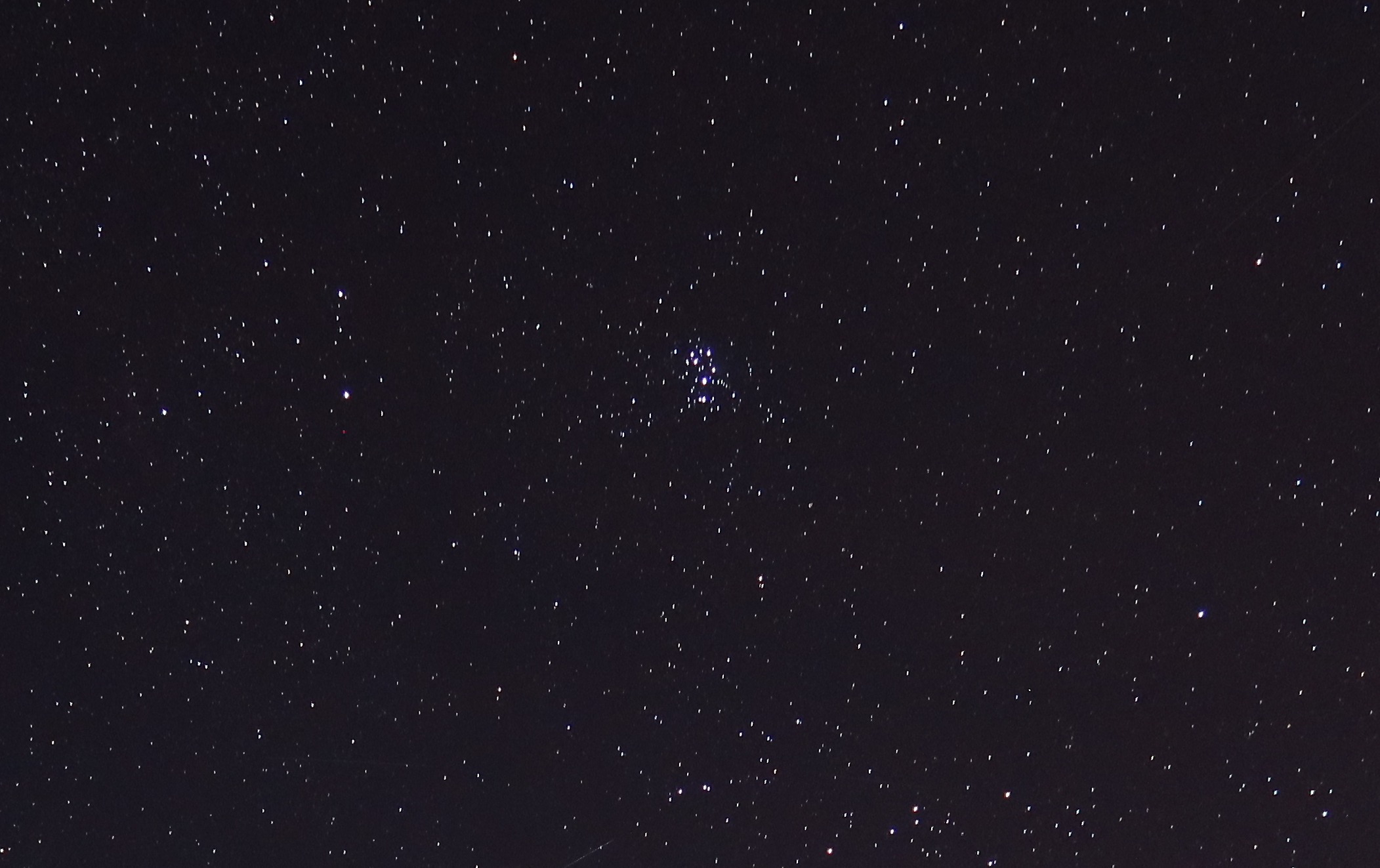
How you pronounce Pleiades seems to depend on what side of the Atlantic you are on. In the UK many of us say ‘Ply-a-dees’, whereas in the US they say ‘Plee-a-dees’, like in the Red Hot Chilli Peppers song ‘Can’t Stop’, which ends with ‘can I get you maybe even three of these, coming outta space to teach you ‘bout the Pleiades’. The name Pleiades could mean 'the many', ‘flock of doves’ or more likely, 'sailing ones'. This is because the Greeks, being a very nautical culture, looked to the movements of the stars to plan their sea trips and the rising of the Pleiades was said to bring calm weather, perfect for sailing.
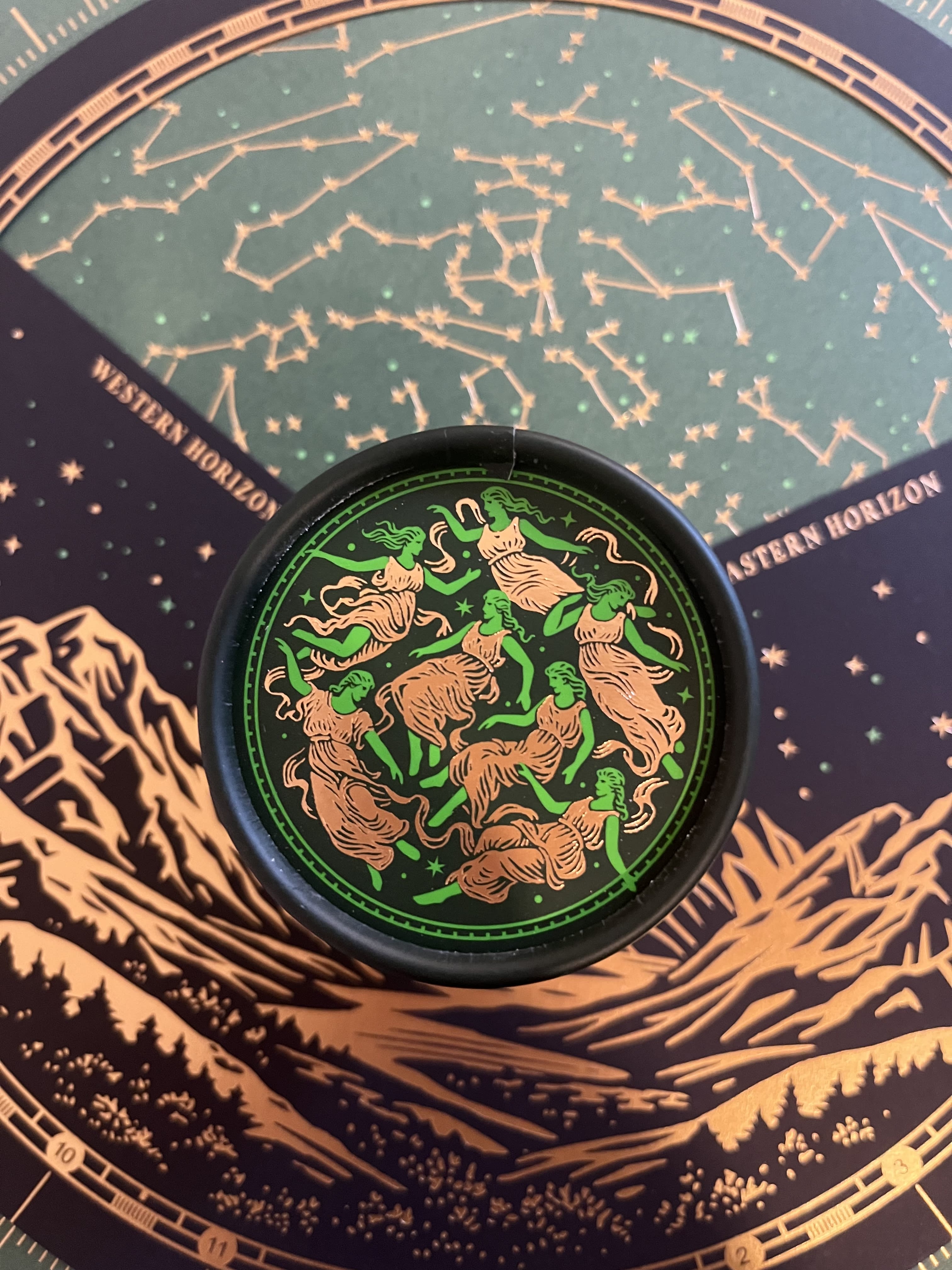
The names of the individual stars come from the Greek myth, from the seven daughters of Atlas, the titan who held up the heavens, and the nymph Pleione: Alcyone, Merope, Asterope, Maia, Electra, Taygeta and Celeano. They were transformed into a flock of doves and flew into the sky to become the star cluster, or were put there by Zeus. This was either because they were running from the pursuit of Orion the hunter, or because they were overcome with grief following the death of their half sisters, the Hyades. There’s also a story that says that one sister, Merope, left the group to marry the mortal man Sisyphus (who is the same guy who was punished in Hades to roll a boulder up a hill for eternity) and that is why the cluster is often said to have six, not seven sisters.
Various Australian Aboriginal peoples also have ‘seven sisters’ stories for the Pleiades. Some say they were chased by a man who is either Orion, the planet Venus, or a man who remained on Earth while the sisters flew up to the sky. A lovelier story involves the Seven Sisters singing to their husbands, the stars of Orion, who would dance to their songs. Another story credits the Pleiades with discovering fire-the Karatgurk sisters, as they are known, carried with them sticks topped with embers which they used to light fires. They kept their knowledge secret from everyone else until a wily crow stole their embers and gave the power of fire to the world.
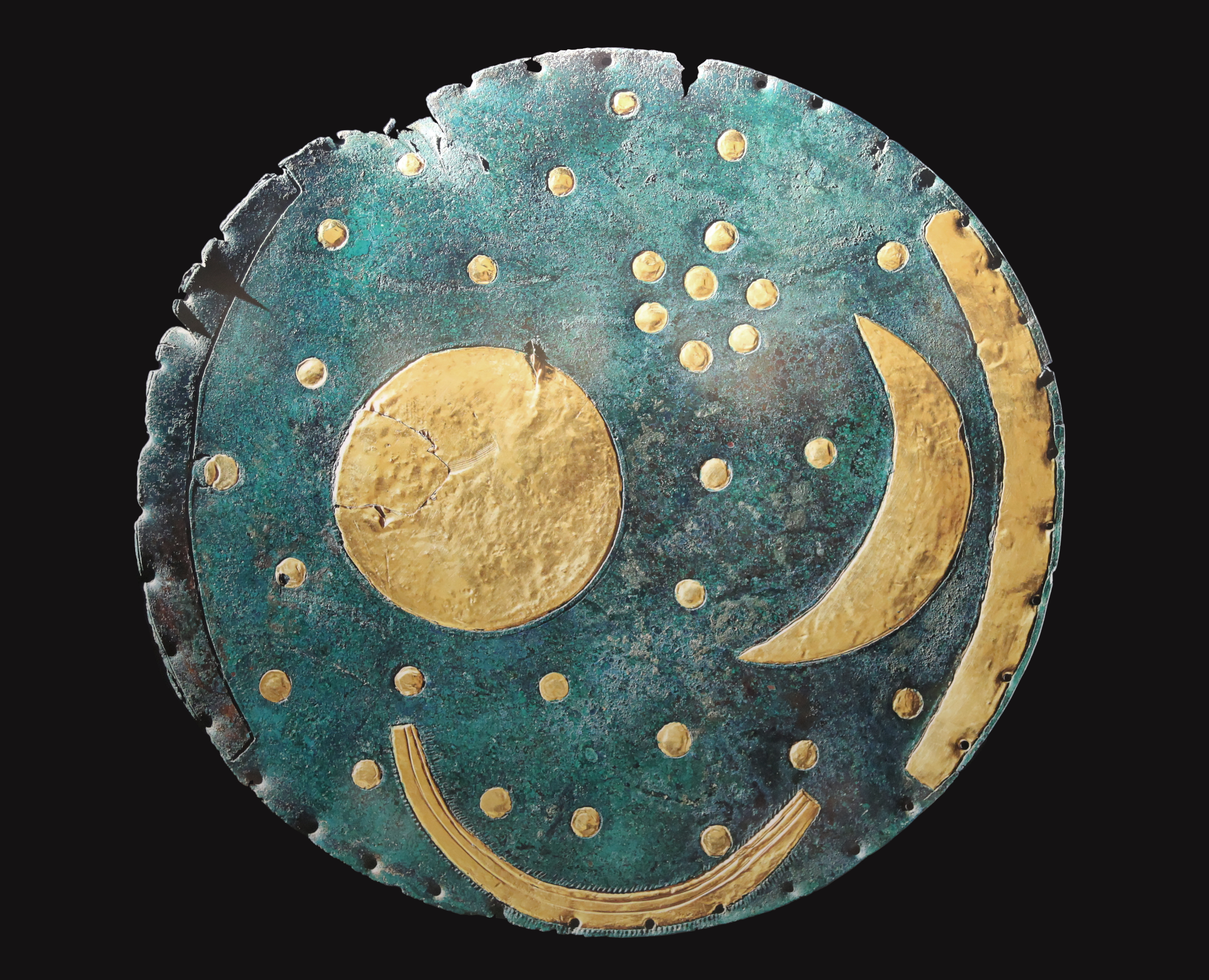
As they are located in the zodiac sign Taurus, the Moon and planets often align with the Pleiades. They have been used as calendrical markers and in agricultural practices, showing when to begin a new year, or when to plant certain crops. The earliest depiction of the Pleiades in art is accepted to be on the Nebra Sky Disk from Bronze Age Germany, which also shows a starry sky with the Sun and Moon, but also more mysterious details like a strange arched shape which some think is a rainbow, but others think is a ‘solar boat’, a motif found not in Germany at the time, but in ancient Egypt-could these two cultures have communicated somehow?
The cluster may also have been painted thousands of years earlier, on the cave walls of Lascaux. Remember the Taurus post? Well, on that bull painting, there is a clump of spots on the bull’s back that looks very much like the Pleiades, in appearance and orientation. Whether this really shows the star cluster is still under debate though!
The Māori still use them to mark their new year ceremonies, to them these stars are known as Matariki. Some other names for the cluster include Thurayya in Arabic, Krittika in India, the hens of Freyja to the Norse, the hen and chicks in Germany, the Old Wives in Poland and Russia, the Rattlesnake’s Rattle to the Maya, the Digging Stars to the Zulu, and in Japan they are called Subaru-yes, just like the car manufacturer, check out the logo on a Subaru next time! It means 'coming together'.
With the naked eye, you can see about 6 or seven stars, depending on the darkness of your sky. It is said that these stars were also used by ancient peoples to gauge one’s eyesight, one story you might come across is that they were used as an eye test by Roman soldiers, seeing many stars there meant you’d have a sharp eye for battle. (The same story has also been told about Alcor in Ursa Major, but I’ll talk about that in another instalment!) But looking with binoculars/telescope reveals many more stars.
They are what is called an open star cluster, made of thousands of hot young stars, a lot hotter than the Sun, and this high temperature gives them a gorgeous blue colour. They are all born from the same nebula and gravitationally bound, so they really are sisters, a true stellar family. Photos of the cluster show them shrouded in veils of dust, giving them an ethereal appearance. They are 444 light years away from us-the light you observe left when Elizabeth I was Queen of England.

On the 13th, in the UK, the Moon will be so close to the Pleiades that it will cover some of the outer stars of the cluster. This might be hard to see because of the Moon’s brightness, almost at full phase. Binoculars will help.
We are in a rather interesting time for observing the Pleiades, and this is all to do with the Moon. Since 2023, the Moon has been occulting, or hiding, parts of the cluster, and will do so until 2026. Next December will be even more exciting because that’s when the Full Moon on the 4th will go right inside the cluster, occulting many of its main stars. I find it very telling that these Pleiades occultations coincide with the major lunar standstill (which I will discuss during in my upcoming Full Oak Moon post), and considering the ancient veneration of the Pleiades and the way they marked calendars, and observation of the Moon’s wanderings from millennia ago, I do wonder if at least one of these historic cultures noticed the coincidence of the two events and maybe had a lunar-stellar calendar based on it. Maybe that’s why the Pleiades were so adored. There are other stars hidden by the Moon during these lunar movements that could also be significant. This is just my speculation though as I haven’t read any theories about ancient calendars that specifically link stellar occultations (and specifically the Pleiades) and lunar standstills-it’s one or the other. But putting the pieces together, I can’t help thinking of stumbling across some kind of lost knowledge. As we are talking about a time before the invention of writing, we may never know…

When I look at the Pleiades, I am reminded of the importance of coming together and community, reflected in the stars, something that is more pronounced in midwinter. Think of how animals huddle close together in cold weather, and people also come together, not just for physical warmth, but social warmth too. Perhaps this was, along with many other reasons, why this cluster appealed so much to our forebears. It represented siblings, groups of women, and also the ancestors. Your own ancestors probably noticed those same stars, so look up and think of the ones you love, whether they are near or far, present or passed on, as you watch the Seven Sisters dancing in the dark.
This is just a taster for what I hope will be a series of posts about the Pleiades, which ideally would be posted when the Moon is close to or hiding the cluster, or just before so you can go out and see the pairing of our satellite with these distant sisters. When this happens I will post a little bit of science and story about the cluster because there is So Much To Say about these stars…
Prompt:
Inspired by the symbolism of the cluster as meaning 'the many' or 'coming together': what is your community or kinship?
This can be groups in real life, friendships, you can think about the upcoming festivities-will you be coming together with family and friends, or supporting your local community? Or maybe, this could be about the human/more than human kinships you would like to be part of, if you feel disconnected right now.
More info
Sky and Telescope’s article about the Moon occulting the Pleiades confirms a connection to the lunar standstill.
A very interesting read, made more so by the fact that after the Plough this was the next constellation I learned, many years ago.
I was only looking at it a couple of nights ago.